June 23, 2011

Book Review: The Omnivore's Dilemma

I recently devoured a terrific book by Michael Pollan entitled The Omnivore’s Dilemma.  Now, this book was released in 2007 so I’m a bit behind the ball, but Pollan’s message strikes such a deep chord with me that I feel I need to spread it around.  Last summer, I crossed this great country on a motorcycle (read about it here) and, having never seen the Midwest except from the seat of a jetliner, was shocked and more than a bit dismayed to experience firsthand the American industrial agricultural machine.  I witnessed field after field, mile after mile, and DAY after DAY of nothing but corn and soybean!  Yes, I understand that we are a nation of 300,000,000 people and need vast amounts of food, but the utter lack of biodiversity across an entire region just confounded and contradicted every bit of knowledge that I have gained in my studies in biology and environmental science.  Now, I know that as kid from the suburbs of Connecticut, my critique of American farming may ring hollow in the ears of those living in the farm belt, but for crying out loud, do we really need to be injecting pure anhydrous ammonia into our soil to fertilize our crops?  How could we have gone so far astray?

Well, apparently I’m not the only one who pauses to think about our food in such a light.  In The Omnivore’s Dilemma, Pollan essentially investigates the various ways in which Americans produce, process, and consume food.  Naturally, he starts out with a bang and dives right into a dissection of the vast corporate agri-business that supplies the majority of our food, with the discussion centered on the exploits of the humble (or not so humble) corn plant.  Through the “miracle” of modern agricultural and food science, the corn plant has become the foundation of our processed food system in which a grain of corn is broken down into basic molecules and synthetically reassembled into much of the “food” available at the local supermarket.  Take a look at anything with a nutrition label and a list of ingredients – much of the stuff that you can’t pronounce is probably manufactured from corn.  I won’t even get into his descriptions of industrial meat production, but I’ve seen the feedlots in Kansas and can vouch for his tale.  Why so much corn, you might ask?  Pollan hints, no, jabs at various government policies and market conditions that drive farmers closer to the brink of financial extinction to supply large corporate grain processors with ever cheaper raw materials.  The unwritten message is, “Gee, I bet these processing corporations can afford to purchase some pretty influential congressmen on Capitol Hill”.  The written message is that the industrial agricultural system, with the backing of the United States government, endeavors to transform petroleum into food at the expense of fair economy, the environment, and our health.  Do heart disease, obesity, and diabetes ring a bell?  They're all linked to industrial food.  Pollan takes the stance not that of the typical tree-hugging enviro-conspiracy theorist, but of a horrified, intelligent observer looking into the system as an outsider.  Skeptical?  Read it.  Your library probably has a copy on the shelf right now.

Pollan ventures next into the burgeoning "organic foods" market, with a focus on the type of organic goods that you might buy at Whole Foods.  The results of his investigations are disappointing but not surprising.  As you might suspect, the organic food industry is, for the most part, just that - an industry.  Yes, lettuce may be grown without petroleum-based fertilizers and chickens may not be fed antibiotics, but the system still suffers from monocultured fields, crowded animal feed lots, and intercontinental transportation of foods (carbon footprint, anyone?).  Pollan cites the example of an “organic TV dinner” as the ultimate hypocrisy of the organic food movement.  There is redemption, though, in his exploration of the “beyond organic” food movement.  In the most enlightening chapters, Pollan visits a Virginia farm where one visionary farmer studies and applies the rhythms of nature to his cattle and chicken operation.  The farm, by Pollan’s description, is really such a beautiful ecosystem that I won’t attempt to paraphrase – just read the book already, eh?

The last chapter focuses of Pollan’s efforts to serve a meal entirely of his own creation, and by that I mean he hunts the boar, picks the mushrooms, grows the lettuce - you get the picture.  Delicious yet time consuming and, he admits, just as impractical for modern life as the industrial system is deleterious to the environment.  The compromise, he argues, should be somewhere in between. 

My overall take on the book is that it confirms what I already suspected about industrial food, but Pollan blows me away with his detailed research and engaging writing style.  The Omnivore’s Dilemma left me disgusted with the current state of affairs, hopeful with the promise of ecology-based local farming, and fearful of the government’s reaction to alternative food movements that challenge their corporate partners.  (In what backwards world do live when locally-produced vegetable, dairy, and meat is considered “alternative”?)  So what are your thoughts on this subject?  Do you eat?  (That’s a rhetorical question, folks…)  Do you know where your food comes from?  Are you a thoughtful consumer?  How do you rate the tradeoffs between nutrition and cost?  Would you be willing to support local farms?  Do you believe that your food dollars may be more influential than any vote you cast in a ballot box?

June 10, 2011

Farmer Hippie, How Does Your Garden Grow?

Two posts in two days, wow, kid's on a roll!

It's only early June but the garden beds at the Woods Hippie homestead are covered in lush vegetation and we've already enjoyed some of the spring crop.  I feel as if I have been working the garden for months, because, as it turns out, I have!  The early season bed was seeded in late March and early April with peas, carrots, radishes, chard, and lettuce...the usual cool season contenders.  The peas were content to stay snug in the soil until well into April when they all apparently got the memo and sprouted with vigor.  Now, the "bush" peas stand nearly three feet tall and I'm constantly pinching the growing tips to inhibit further upward growth and to promote flowering.  We've enjoyed several weeks of SPICY radish slices in our fresh romaine salads.  I will never voluntarily purchase a store radish again after tasting these little red delights, the flavor is incomparable.

The garden, circa May 16.
Starting to fill in!
The summer bed was seeded with bush snap beans and basil just after Mother's Day.  Around the same time, I prepared my very first Three Sisters garden, which is a Native American companion planting technique with corn, beans, and squash.  The theory has it that the corn provides a trellis for the pole beans (I chose runner beans), the beans provide nitrogen for the heavy-feeding corn, the corn provides shade for the delicate squash, and the squash, with their broad leaves and prickly vines, serve as a living mulch and critter deterrent for the garden.  For the squash, I planted a variety including butternut, pumpkin, zucchini, cucumber, and melon.  I started some seeds indoors under a grow light and planted some seeds directly in the ground.  The plants started indoors met with mixed results once hardened off and planted outdoors; I'd say 60% survived the transplant.  The direct-seeded plants were nearly universally successful, though the surviving transplants have a bit of a edge, size-wise.  The corn, as evidenced in the photos, have almost 18" of height at this point.

I am blessed in that I have two neighbors with green thumbs, both of whom cultivate heirloom and odd-duck varieties of tomato and gift me their extra seedlings.  I can't keep track of the varieties growing in my beds, but I think I have some Cherokee Purple, Sweet 100, Yellow Pear, Big Boy, and Better Boy.  The bigger plants are already flowering!

Perhaps a weedwack is in order, but those weeds are tasty Lamb's Quarters!
As you might expect from a guy who's blog moniker is "Woods Hippie", the garden is cultivated organically.  I apply quite a bit of compost every year, though this year I did add some bonemeal-based fertilizer to add some other nutrients, and I recently applied a hydrolized fish fertilizer.  The plants have responded well to the light fertilization, and I have yet to see any significant insect problems (knock on wood).

So, for now, things are looking good as the spring crop wraps up and the majority of the garden is settling in for the long haul.  The seedlings are now established, which takes off some of the initial worry, now just as long as everything withstands the powerful thunderstorms that have been rolling through and I remember to water every now and then, hopefully we'll be looking at a nice harvest in a few months!  
Grandma keeps an eye on the house in the form of a rose bush...


Have a great weekend!

June 9, 2011

A Day's Hike into the Clouds

Moist breezes swirl through the intricate spruce forest, carrying a sweet, delicate fragrance to my nose...a fragrance that is not pine, not mist, not soil, but a gentle concoction of all earthly pheromones that strike deep into some primordial nerve center, and a sense of home washes over me.  Momentarily bound in a cosmic plane, I shift my focus back to my physical reality and resume picking a slow and methodical path through the jumble of schist and granite boulders that dot the mountainside.  The path, and the surrounding forests, are constant sentinels of a medieval world that we, as travelers, struggle to comprehend on our recreational forays into the kingdom.  

There is magic afoot here, ancient powers that conspire to anchor trees in bare rock and send their woody antennae skyward in a silent quest for light.  Water, the lifeblood, the oil in the cylinder, seeps from every imaginable and unimaginable crevice from springs unseen, pulsing through beds of moss before submerging into the soil matrix, to emerge some months later in a river destined for the sea.  Meanwhile, secretive flowers advertise their genetic ribbons to a selective audience, perhaps to the one particular breed of insect that has evolved a quiet symbiosis with its floral brethren.

"Focus," I again remind myself, "or your tired feet will stumble and pitch you headlong into a rock!"  Oh, but for that intoxicating balsam perfume!  Onward we climb into a cloud, a literal ascent to the heavens.  Here, the weather has shaped trees into boreal statues crafted of gnarled fiber and resilient waxy needles; deformities, we might infer, but to the trees, all the better to withstand to ceaseless winds and brutal winter snows. 

Today, the bold rock and resolute statues of wood play second fiddle to the atmosphere, which, to the unaccustomed, at first appears to be a featureless sheet of white but, upon further inquisition, we find that the aether forms a vaporous canvas for the broad brush strokes of meteorological happenings.  Tendrils of cloud break free from the main body of fog filling the valley to whip past our faces and race through the trees, stripping us of the mountain views for which we came, but garnishing our climb with a much more surreal and contemplative vista.  What else but fog could free us from our preconceived expectations and usher us into an ego-less appreciation of the mountain as it presented itself to us?

It is only much later when, on the drive home, we see the entire ridge and solve the meteorological mystery that leaves our little mountain enshrouded in mist.  The ridge intercepts a moist northbound air mass that speeds through the valley.  The invisible freight train careens into the the ridge and climbs as did we, only much, much faster, compressing against the mountain then cooling in a flurry of instantaneous condensation which gives birth to a transient toupee of cloud over the barren rock.  On the summit, we surmise that the entire Presidential Range was enveloped, but our later observations show us that the clouds merely break over our mountain like an ocean wave before absolving themselves of existence in the lee of the rock, evaporating as uncountable numbers of water molecules warm imperceptibly and vanish.  

Mother Nature captures us again with her sorcery as she forms and destroys clouds at will in front of our eyes, but she graces us with benevolence today as neither rain nor sleet mar our passage; we journey home, tired as always, but ever more transfixed...

May 17, 2011

Spring is in Full Swing!

Another glorious New England spring is in full bloom in the wake of the best winter season I have ever experienced, and I couldn't be any happier.  A devout winter sports enthusiast to the core, I have no qualms hanging up the skis when the weather turns here in Connecticut.  Sure, the Greens and Whites may harbor pockets of rideable snow into June, but I'll leave those outings to the locals.  They don't have to drive too far at $4.20 a gallon to ski marginal backcountry routes.  

Cape Pogue...a poetic juxtaposition of sky, sea, and sand.
Anyways...spring!   I regard this season as our annual reward for enduring months of iced-over windshields and heating bill-induced heart palpitations.  Few complaints are lodged during these fleeting weeks of flowery transition between winter and summer; even the most curmudgeonly opponents of "weather" seem to embrace the live-affirming spring rains and silence their atmospheric grumblings, if only temporarily.  The days are warm, the nights encourage open windows for deep sleep, and the gentle rains and tumultuous clouds lend a dramatic backdrop as biology reestablishes seasonal dominance over the reticent geology.  I have found myself engaged in an endless fury of activity spurred by the abundant daylight, and as a result I have made good on some of the aimless goals which I presented in an earlier post.

Can you believe I lived with this salty dog for four years?
The warmer weather and emergent foliage bring out the travel bug in me, so I indulged my fancy with a weekend trip to Martha's Vineyard to visit some old friends and catch a few early season fish.  I am vastly fortunate to have roomed with Captain Roberto during my college days, and not only is he one helluva nice guy, but a skilled fisherman taboot.  The first order of business was to pursue some Morone saxatilis in one of the Vineyard's most scenic and secluded backwaters.  The shallow waters of the pond proved to be the perfect environment for the Gheenoe, the Vineyard boys' recent Florida-inspired small craft acquisition.  With a 15-hp outboard, shallow draft, stable casting deck, and ample beer storage, the Gheenou got us into the goods in the most stylish of redneck fashions.  Armed with a carbon-fiber pole, Roberto skillfully piloted the craft around the edge of the marsh where the stripers were feeding in various inlets.  We met success with a topwater Jumping Minnow and soft plastic baits.  The time spent in the salt pond was a highlight of the season so far...great conversation with a great friend, a fun boat, and good fishing all framed by the pristine coastal dune ecology.

Capt. Roberto at the helm.
To top off an already great outing, the following day found me in the company of the island's elite sportfishing charter guides, the boys of http://fishingthevineyard.com/ (minus "Carl", who was otherwise "engaged").  Captain WBC was eager to show off his new ship, a 22 Pathfinder outfitted with a custom poling platform.  Talk about a humbling experience, fishing with these guys!  All I could do was hang on tight and cast where they told me, with expected success, though  I'm sure I'm not the first amateur from Connecticut they have brought to sea.  Anyways, if you enjoy great fishing photography and well-written prose, you must check out their blog at http://fishingthevineyard.blogspot.com/.  And if you don't know what FTV are talking about in their posts, you must i.) meet Kevin and/or Hoagie, ii.) listen to more Grateful Dead than you currently do,  iii.) book a charter and find out what it's all about, or iv.) listen to Grateful Dead while on a charter.

If Ted Kennedy drove a Gheenoe on that fateful day on Chappaquiddick, he might have been president.
Though the weather surely looked like rain, we found the wads of birds and, between bouts of hurling insults at dejected Phocidae, hooked into some striped bass and entertaining bluefish before the schools of bait gave way to fruitless casts and a fine dockside lunch in Woods Hole.  After two days on a boat, I was thoroughly tired, sunburned, and dehydrated, but the spiritual well was replenished and the cosmic batteries were recharged.  

 Here are a few more from the weekend.  Enjoy.

The Woods Hippie gets one.


If the thunder don't get ya then the skull knob will...


Roberto finds fish in the strangest of places if you look at them right.

30 knots and no skipper to be seen...

The lawyer hooks up on his first cast of the season.

April 28, 2011

The Green Revolution?


Morning dew, Grand-Sault, New Brunswick.
As the seasons change along with my recreation opportunities, I would like to step back from trip reporting for a bit and delve into some of the more philosophical issues that tend to divert my attention from time to time, and I would like to share some random photographs from my collection that show the various moods of nature that I have witnessed on my travels.  With last week’s celebration of Mother Earth Day and my involvement in my employer’s sustainability initiative, my mind has been awash with thoughts of the condition of the natural environment and the recent “green” revolution.  It seems that every media outlet is touting some new “green” product and governments are promising major leaps in renewable energy and transportation alternatives.  Closer to home, my office has been making efforts to reduce consumption of paper goods and electricity in the name of sustainability, and I have been attempting to ride my bicycle to work to save on a little gasoline here and there.

Moonrise on the Riga Plateau, New York.
This notion of sustainability is part of a spreading environmental awareness that has emerged in popular culture in the last few years; all of which is a step in the right direction, but I have this feeling that something is missing.  Our culture, despite the “greening” pastures, still seems hell bent on following the consumer model that has become entrenched in the last 50 or 60 years.  You should have an idea of what I’m talking about – the conspicuous consumption of petroleum and disposable retail goods, our reliance on an agricultural system based on chemical fertilizers and monoculture, and sprawling suburbs that leave automobiles as the sole transportation choice.  Perhaps you’ve heard the saying that if each of Earth’s citizens lived an American lifestyle we would need something like five or six more planets to accommodate everyone’s needs.  This hardly sounds like sustainability and brings to light the myriad environmental injustices being perpetrated around the world in the name of profit and convenience.  When I ponder this, the pessimist in me starts to think that the whole "green" revolution is pile of smug shit that lets us, on a mental level, continue to live our wasteful lifestyles while believing we're doing something good for the environment.

Graham's Harbor, San Salvador, Bahamas.
The optimist in me, however, takes heart in that factions of the younger generations are recognizing the folly of the mass consumption model and are making an attempt to return to a simpler lifestyle for reasons both economic and environmental.  I see a renewed interest in planting gardens to supplement store-bought food, and people are choosing to live closer to the workplace to avoid long commutes.  Interestingly, I also see a weakening of the  of "work hard and sacrifice and you might be rewarded" corporate mentality (at least among employees, not necessarily employers).  Instead, I see a shift towards scaling back lifestyles so as to minimize reliance on the daily grind.  Obviously, though, there is a long path to walk in this respect, but every long journey begins with a single step.  Thoreau was on that right path, back in 1845 in his cabin by the pond...

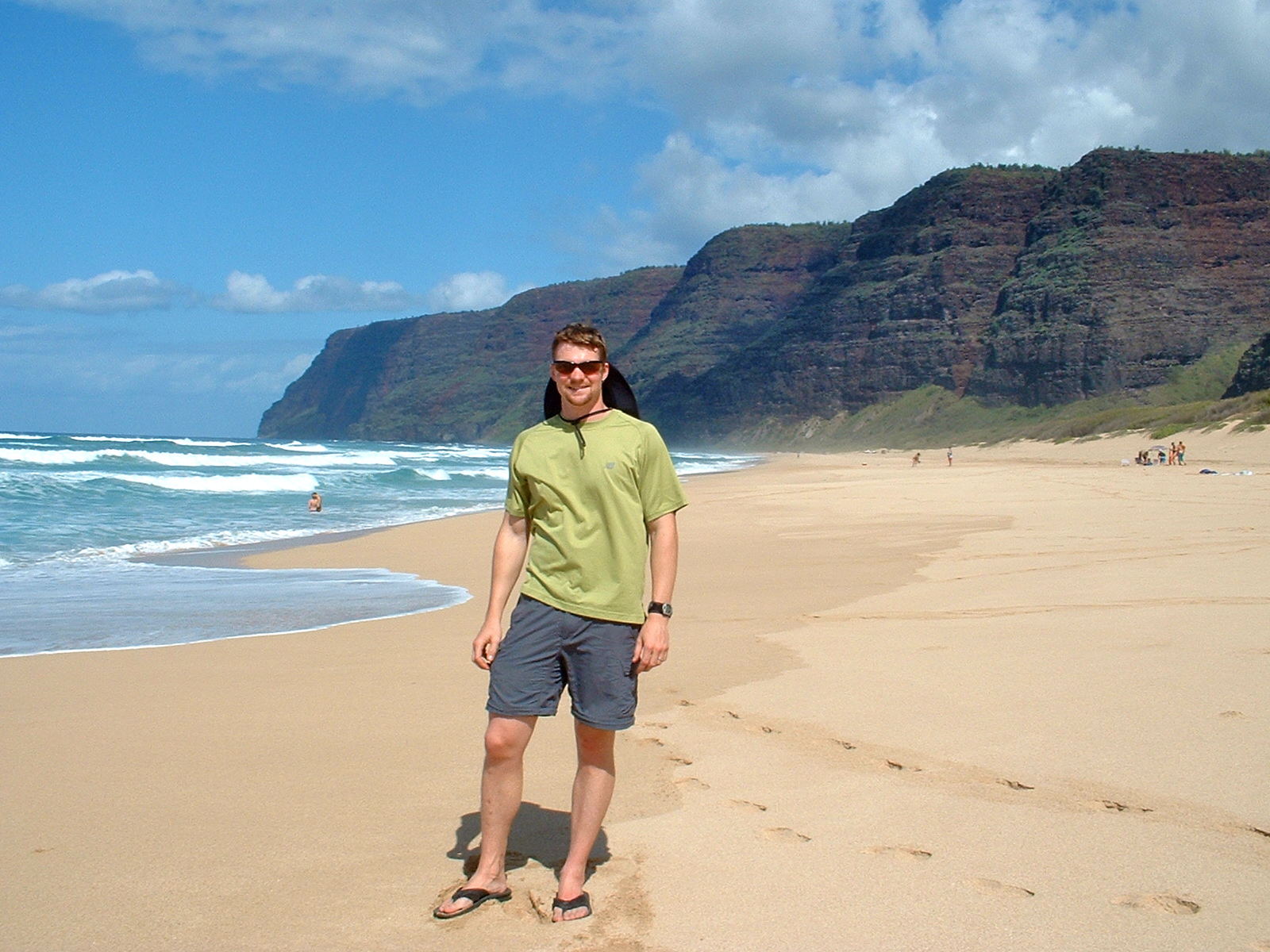
Na Pali coast of Kauai.
I wonder, though, how the current cohort of environmentally-minded pioneers will fare as they progress in their careers and begin earning the money that makes the consumer lifestyle more attractive.  Take a look at the Baby Boomers, who sparked the first nationwide environmental movement in the 1960's and 1970's and then moved on to become the most voracious consumers in American history.  I am hopeful that younger Americans may stay true to their ideals of simplicity, self-reliance, and environmental stewardship because the future of the American economy may require it.  Let's face it, the glory days of booming manufacturing and cheap raw materials are waning and we may have no choice but to return to regional economies in which foods and goods are produced locally and wasteful consumption becomes unaffordable.

Connecticut River south of Enfield, Connecticut.
When I think about conscious lifestyles, I look back to my grandparents' generation, often referred to as the Great Generation; those born in the raucous 1920's, raised in the lean times of the Great Depression, and seasoned on the lethal shores of France and Iwo Jima or in the aisles of a factory at home.  In my mind, these people knew how to stretch a dollar because they had no other option, and they learned how to go without.  They grew gardens, walked to work, and hung clothes on the line not because of the environment, but because of economy.  (Not The Economy, as pitched by the media and stumped upon by politicians, but economy as in living within means; Thoreau's notion of economy).  But come to find out, what was good for economy was good for the environment, and vice versa. 

Hammonasset State Park, Connecticut.
So, as the "green" tide pushes further and further inland into the consciousness of American society, we need look only a few generations back to get a sense of what our future may hold.  The next few decades may prove to be a shock to our collective systems as we forge on with finding innovative ways to power our homes and feed our bodies, but as long as we develop a grasp on true economy and don't allow The Economy to pillage the environment and our souls, we just might make some progress as a human species.


April 17, 2011

The Art of Living Simply: A Backcountry Trip Report, Part II

My cousin Johnny G. was cool to share his photos from the backcountry trip.  Rather than typing some overly-worded essay on the ethereal nature of backcountry skiing (did I really write "Gaia's temple" in the last post?  Note to self, cut back on drinking and blogging), I'll simply post up the pictures and let them speak for themselves (well, plus some captions; blogging is by definition narcissistic so I can't help but impart some Woods Hippie flavor).  Enjoy.

Yup.
Dreamscape.
Camping and skiing here is one of the coolest things you can do without involving a 9-iron, pack of condoms, and some illegal fireworks.
We're, like, totally hardcore and all, but you can't argue with chowda' bread bowls and cold pints!
Long distance runner, what you holdin' out for?
Caught in slow motion in a dash for the door.
The flame from your stage has now spread to the floor
You gave all you had, why you wanna give more?
The more that you give, the more it will take
To the thin line beyond which you really can't fake.

Fire! Fire on the mountain!

Saturday was a tryst between orographic snowsqualls and an emergent spring sun.  While the cosmos had yet to declare winter or spring as victor , we as riders won big.
Dear couch potatoes.  It's okay, we understand that you didn't want to miss the next episode of Idol.  We made sure all this powder got skied.  And by the way, while you were letting the television rob you of your mind and an actual life, we were thriving in the woods and continuing the great survivalist tradition.  It's cool though, but don't get mad at us and those like us when this society goes to shit and we procreate with your girlfriend and inhabit the woodlands while you sit uselessly on the couch, trying in vain to click a remote control at a blank TV screen while wondering what the hell to do with yourself...
I should have waited one more week to shave the beard.  It was friggin' cold out.
Winter is but a distant memory here in CT, and Johnny G. is onto the next thing, along with the rest of us.  Marquis nailed a top-10 finish in his first MTB race of the season, and my running shoes have been hitting the trails on the reg.

April 12, 2011

The Art of Living Simply: A Backcountry Trip Report, Part I

"Most men, even in this comparatively free country, through mere ignorance and mistake, are so occupied with the factitious cares and superfluously coarse labors of life that its finer fruits cannot be plucked by them."

-Thoreau

Perhaps this post should be titled, "The Art of Simply Living".  Either way, the message is the same.  I am pleased to report that the Woods Hippie ski tribe plucked the finest of fruits during a recent extended excursion into the wilds of northern Vermont's backcountry.  In a fitting tribute to Thoreau's notion of economy (please read Walden if you have not already), we resided in a simple cabin with Spartan accomodation and our souls were enriched by tending to our most basic physical needs of food and shelter while living for days on end on skis and snowshoes.  We lived and breathed the ski lifestyle for a few ephemeral days, and, with the cares of a grinding civilization temporarily behind us, our thoughts were able to circle around to the direction of the wind, the condition of the fire in the woodstove, the tilt of windblown icicles on the high-mountain spruce, the interplay of sunlight and shadow on freshly-fallen snow, and...so as not to sound too erudite...the level of beer in the keg.  Replace the Gore-Tex with leather, skis with muskets, and fresh powder stashes with bison and we could have just as easily been a band of spirited mountain men in the pre-colonial past...both scenarios boil down to men thriving in wild pursuit of adventure in equally wild places.


The cabin was at once an incongruity and an extension of the mountainside...an incongruity in that such a crude structure should not reside in Gaia's temple; an extension in that its simplicity somehow just fit in with the woods, a permissible excursion of man's modest need for shelter in a cold place.  In many ways our small cabin was a modern version of Thoreau's; a shelter that serves to grow the spirit of wilderness travelers without unduly imparting itself on the experience.  Except, as Thoreau ultimately discovered, the cabin was so magically simple that we couldn't help but make it the centerpiece of our excursion.

Thoreau harvested beans and we harvested powder.  Other than that, not much else differed.
Kindling still needed to be split in 2011 as in 1845.


The crew was mixed this year with two seasoned vets and two cabin rookies, though the cabin rookies were no strangers to the outdoor lifestyle.  Johnny G. jumped into the fray with a fierce head cold and shone through by tending the fire and providing some rich venison stew.  Jamie joined the party with a 5-gallon keg of Trapps Golden Lager (hauled over a mile from the trailhead by Marquis de Richmond, I must add) and a home-grown ham dinner.  Marquis and I toasted the third successful installment of the cabin trip and lamented the absence of one of the founding triumvirate.  Everyone found a sheer delight in the remarkable late season snow conditions; late season by calendar only...Mother Nature gripped us in the full force of mid-winter with below-zero nighttime lows and howling daytime winds choked with copious orographic snow.

The woodstove stood as the silent sentinel over the day's activities; a source of heat and purified water and a catalyst for conversation.

The day's explorations unfolded with minimal forethought; we suited up and stepped into our skis and snowshoes and struck off on the high mountain trails, guided by the occasional marker until our search for powder and trees found us navigating the woodlands by map, compass, and dead reckoning.  After two years of teasing us with variable snow conditions, Ullr finally blessed us with shin-deep pow on top of a gracious base.  Skis and 'shoes expedited travel, but the base was firm enough to prevent postholing on late night latrine runs...

Johnny G. gettin' his.

By late afternoon on the second day, all parties converged at the cabin.  With woodstove blazing and night falling, the temperatures on either side of the thin wooden walls made their respective shifts, and our attention turned from skis and trees to cold beer and hot food.  The non-campers and spouses out there might ask, "What do you do on those camping trips?"  Jamie succinctly offered, "Mostly burping and farting..."

In all reality, a ski cabin trip is an age-old tradition in the vein of deer camps and fishing lodges.  I won't even attempt an explanation.  Those who know, know.  Those who don't, don't.

Marquis gettin' his.


Then he got an idea.  An awful idea.  The Grinch got a wonderful, *awful* idea!
Looks like all the Whos in Whoville will get their presents this Christmas...

Stay tuned for Part II, hopefully I'll figure out how to embed Johnny's sick GoPro footage.

February 28, 2011

The Evolution of a Backcountry Skier

If you've had anything more than a passing interest in New England skiing or snowboarding in recent years, you've undoubtedly noticed the blossoming of the backcountry riding scene.  It seems that every internet ski forum has elegantly photographed homages to the skin track and the accompanying backcountry lifestyle, and such popular tomes as Goodman's guide provide the roadmap to the better known off-resort stashes in the North Country.  Now, I realize that the backcountry tradition is strong and longstanding in New England but there seems have been a definite larger-scale acceptance in ski circles of late.  I can only speculate as to the reasons why, but I suspect that outrageous lift ticket prices, crowds, and homogenized resort experiences are contributing to the backcountry migration.  I say "migration" with tongue-in-cheek because in all reality, the masses will continue to ride the resorts with a select enlightened few making the transition the backwoods, so we need not fret about our pristine mountain escapes being overrun by hordes of greenhorns seeking freedom from resort monotony.  I have some confidence in that statement since the average skier, in my estimation, finds his or her way into the backcountry after a long apprenticeship on the groomers and chairlift.  I'm not trying to sound elitist by saying that the backcountry folks are the creme de la creme, but they have almost always sharpened their teeth over years, if not decades, of plying the manicured slopes.  The progression to the backcountry, at least in my case, was the direct result of that apprenticeship.

What is it about Tuckerman Ravine that makes
shorts and long tights socially acceptable?
The ski history of the Woods Hippie began circa 1988 by all accounts, at the tender age of 7 or 8.  Hell, I can't remember that far back but my mother claims to have had me out on the slopes at that point, and who am I to question my mother?  I do remember Mom riding some vintage '70's gear, which wasn't really all that out of date at the time.  Anyways, by the early 1990's my brother was old enough to ski and the three of us graduated from our local slope in central Connecticut to Loon and Cannon in New Hampshire, where I continued my two-plank education in earnest.  As my father reinvigorated his interest in skiing and my cousins came of age, the entire family clan took up the ski cause on the mountains of New Hampshire and Vermont.  Indeed, those pre-teen ski trips remain among my finest memories of youth.  As the 1990's progressed, my cousins and I, one by one, grew bored of skiing and made the switch to snowboarding, which is still my snow technology of choice!  At this point we were still shreddin' the ski areas but began exploring the gladed runs and all manner of trailside booters as if it were our job.  When I was a senior in high school, my parents treated my brother and me to a week-long ski trip to Utah where I was greeted with my first experience with deep...ridiculously deep...powder.  My brother, who was still on skis at that point, struggled in the deep pow while I figured out how to surf the shit on my snowboard.  He lives in Salt Lake now, so I guess he got the last laugh there...

Those crazy bastards sledded down Mansfield's Teardrop Trail!
(Photo by Marquis de Richmond)
The college years proved to be a hiatus of sorts from the scene; I would ride when the occasion presented itself but my passions were, understandably, consumed by the college lifestyle and all that entails.  The catalyst for making the hyperspace jump to a backcountry junkie came at an unlikely place - work.  Soon after joining the career world fresh out of college, I encountered two like-minded outdoorsmen in the company with predilections for the snowy season, and the rest is history.  With various backgrounds in snowboarding, alpine, and nordic skiing, we made an instant bonds and immediately began scheming up unforgettable adventures.  All of us had done some winter camping in various capacities (I hadn't since Boy Scouts a decade earlier), but our common interest sparked a fury of gear purchasing, and our individual campcraft congealed into a proficiency that allowed us to forge into the woods unencumbered by trepidation or inexperience.  Together, we pushed deep into the wilds of Vermont and New Hampshire, first on snowshoes with snowboards strapped to our packs, then on waxless backcountry nordic gear.  We made notably stupid descents of such classics as Teardrop and the Mt. Moosilauke Carriage Road on cross country skis, but we also killed it on snowboards at the Birthday Bowls at Smuggs and elsewhere in the Mansfield BC.  Each trip added to our catalogue of backcountry knowledge and ski ability.

Setting camp near Sterling Pond, VT.
Ever on the path of personal growth as snow sliders, we quickly turned to telemark skiing, which gave us the ability to climb and descend on the same gear.  Tele blew the whole thing wide open.  With our discovery of the telemark turn, free-pivot bindings, and climbing skins, we were no longer held back by the technical limitations of nordic equipment or the weight of traveling with snowshoes and snowboards.  And there's no stopping here; no reason to be held fast by a dogmatic attachment to one style of turn (no offense, TTipsters).  Tele is fun as hell and I've finally nailed it after five years of getting schooled by sore quadriceps and wobbly rear skis, but the future is aglow with visions of alpine touring gear and...*behold*...splitboards!  Ah yes, nothing quickens my heart like the thought of ripping turns and wild powder wheelies on a board and then breakin' it down and skinning up to do it all over again.


Morning life at camp on a four-day outing.
Though telemark is here to stay in the Woods Hippie repertoire for the time being, the clan's preference in backcountry accommodations has changed drastically.  The tent, that fabric enclave which sheltered us on many an excursion, has fallen by the wayside in favor of our latest discovery, cabin camping!  Unbeknownst to many, there are numerous backcountry cabins and shelters in the North Country that are available for a nominal or nonexistent fee.  Our latest digs affords us the opportunity to sled in Coleman stoves, lanterns, mini-kegs, and pots of stew and relax in the radiance of a woodstove and some tasteful iPod selections after a sick day of backcountry adventure.  Other than those concessions to comfort, we still have to melt snow and poop in the woods while wearing skis, but the bitter endurance of below-zero nights and cooking on a Whisperlite in a tent vestibule is a thing of the past for now, but not forever!  Consider it a temporary transition from Type II fun to pure unadulterated Type I fun.  The New England backcountry is so diverse that before long, we will shoulder overnight packs once again and strike out in search of the untracked line somewhere just beyond that next ridgeline...

Whisperlite at night.
The rich backwoods traditions do not end with us, the current generation.  Though the apprenticeship never truly ends, the next round of greenhorns always comes up behind us, thirsting for adventure and an escape from the rigors of their complex lives.  My cousin, an experienced snowboarder in his own right, will join the clan this winter on his first backcountry expedition into the wilds of Vermont.  With any hope, the tribal knowledge will pass once again; those little tips such as how to keep warm at night by placing a Nalgene full of hot water at your feet or between your thighs (which, by the way, means you don't have to melt snow in the morning), or how to prime a white gas stove, or how to strip skins without taking off the skis, or how to pack down the snow with skis before pitching a tent, or how to use snowballs in lieu of toilet paper (yup), or how the slope aspect can be the key to a fresh powder stash, or any other of the infinite bits of wisdom that have been accumulated over the years.  To circle back, the great P-tex riding hordes will not move into the backcountry en masse, but there will always be those willing few who love cold nights, spruce-flavored meltwater, hair-raising descents on sketchy snow, and grand fun in the company of great friends.  And that, folks, is the spirit of the backcountry.

February 23, 2011

Aimless Goals for 2011


Tired of winter?  Just go to Hawaii, right now.
About once a year, whilst locked in mid-winter’s icy grasp, I find myself daydreaming about the indelible pleasures of the other seasons – warm breezes wafting through an open window, falling asleep on a mountaintop in the sun, and, most importantly, not having to put on all my clothing to poop the dog.  Now is the time when I lay out my grandiose plans for the upcoming year; few of which ever come to fruition but all of which look good on paper in February.  The promise of warmer days always seems to fill me with energy for tackling various summer projects, but even as I type this I realize that some of this stuff is just plain work.  And, I always seem to forget that a crucial eight hours of most days are filled with another type of work that is necessary to keep the grocery spigot flowing.  Oh well.  Without further ado, I present my perpetual list of goals that I commit myself to every winter and never seem to follow through on during the summer.

Garden

One of the more successful garden years.
My wife and I have kept a garden pretty much every year since we bought our house, with varying results.  As with most things in life, the success of a garden is directly proportionate to the amount of effort invested.  I’ve learned that just throwing seeds in the ground once the last frost passes is not a great way to ensure a bountiful crop; I really need to focus on starting seeds indoors while simultaneously prepping the beds with compost and other amendments, and then keeping that focus to keep the garden watered and free of weeds.  This all sounds relatively straightforward, which it is, but these early spring tasks coincide with the spring skiing season in the North Country, arguably the most enjoyable time to be on a ski hill.  Also, the warming temperatures in southern New England signal the return of two of my other favorite distractions, bicycling and motorcycling.  Anyway, I want to devote some more time to the garden this year as I want to try canning vegetables.  That seems silly since commercially-canned produce is available at a fraction of the cost of what I’m going to lay out for a pressure canner and supplies, but there is something aesthetically-pleasing and anti-establishmentarian about producing my own food that tickles my anarchist sensibilities.

Fishing

The Woods Hippie on a Vineyard striper mission with Hoagie.
I have a veritable sporting goods store in my basement, including a practically unused 5-weight fly rod, two ultralight spinning setups, and a formerly well-utilized inshore saltwater spinning setup.  All have spent the last few years doing little more than putting out the fishing “vibe” around the house.  I live fifteen minutes from one of the finest trout streams in New England, and I could easily cast a few flies every day before work, but then again maybe I should be pulling weeds from the garden.  I also dream about rigging up a way to transport rods via motorcycle or bicycle because adding another sport just makes everything tastier.  The fishing aspirations may be the first ones to be realized, because Mrs. Hippie always expresses a mild interest in casting a line, so any opportunity to get her out in the woods or streams is a bonus.

Hunting


Mrs. Hippie ain't afraid to handle some iron, either.
I have always enjoyed wing-shooting and small game hunting but have not devoted much time to these pursuits in recent years, mostly because I've been obsessed with bicycling and trail running during the onset of hunting season.  I've already purchased my hunting license for this year and submitted my bid for Connecticut's lottery for shotgun deer season.  I have never killed a deer but I am excited to spend some good time in the pre-season scoping out terrain.  Most importantly, I'm hopeful for a freezer full of venison steaks and stew meat to carry me through the next winter.  I have a slew of delicious venison recipes that I've perfected on other people's deer meat, this year it's my turn!

Home Improvement

Yeah right.


Enjoy the rest of the winter folks, spring is coming fast.